01
Map
I map the system start to finish. What people do every day, where the hours actually go, what data they touch, what compliance will and will not allow. Not one task in isolation. How that task connects to everything around it.
Forward-deployed engineering for investment firms
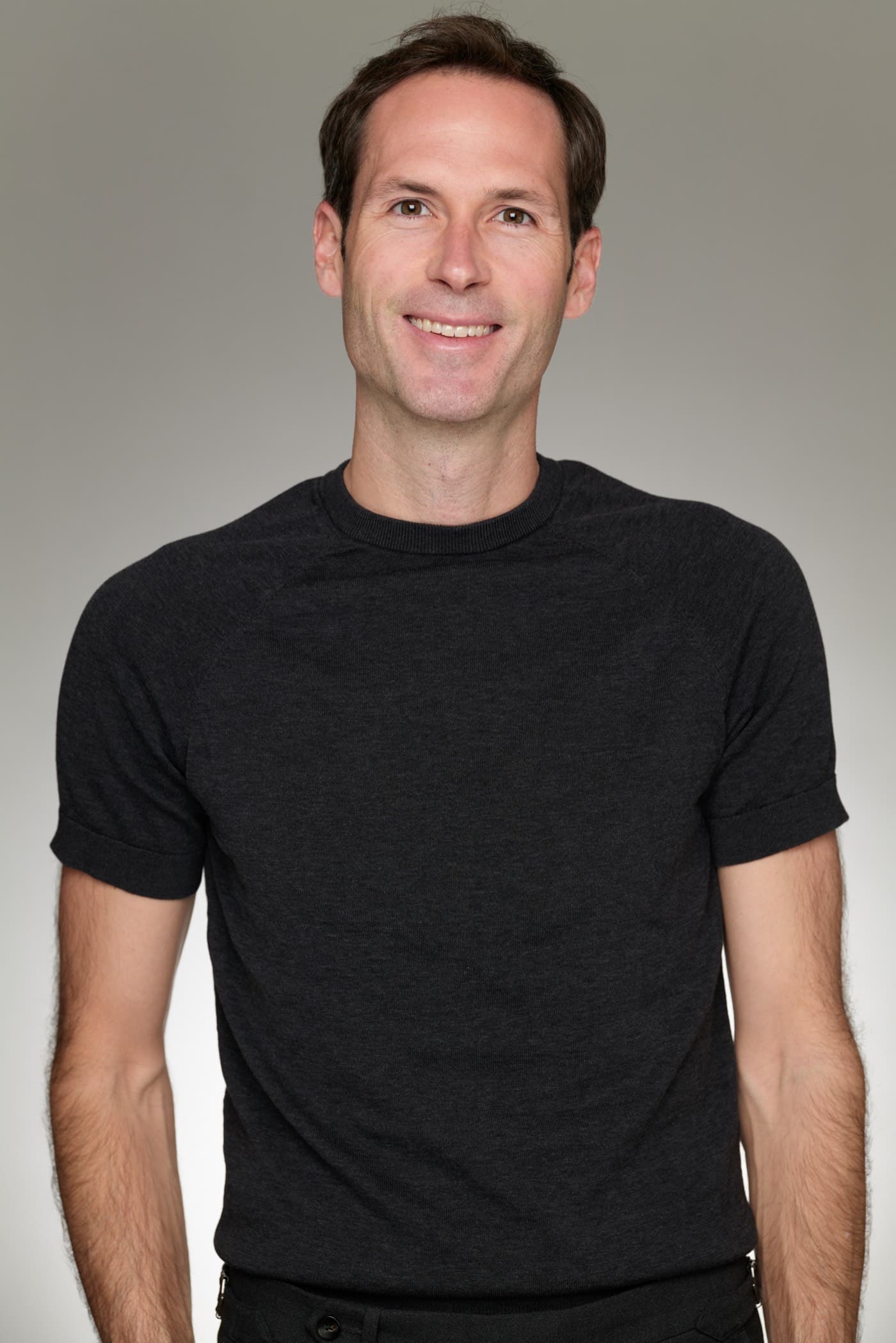
I spent a decade investing at Citadel, Coatue, and Goldman Sachs. Then almost a decade building products, first at my own fintech, then at Perplexity AI. Now I do both at once. I embed with hedge funds, PE firms, and family offices and build the tools their teams actually use.
12+ institutional clients · $100B+ combined AUM · Systems in production, not slide decks.
NYC
Headquartered
100+ trained
Claude Code analysts
2-4 weeks
To first working system
12+ clients
Institutional investors served
Positioning
Most AI consultants hand you a strategy deck and leave. I ship working software.
I embed with your team and learn how you actually work. Then I build the tools that do it for you. Agents, dashboards, screens, monitors. Everything runs on your infrastructure, connects to your data vendors, and comes with documentation your team can maintain after I step back.
The difference is I have sat in the seat. I have built earnings models at 2am before a print. I have written the coverage notes. I know what matters because I did the job. Then I spent a decade learning how to automate it.
How I work
Process mapping is not a new idea. V. Daniel Hunt wrote the book on it in 1996, long before any of this was AI. The discipline still holds up. You map how work really moves, find where it stalls, and fix that part. What changed is the cost of the fix.
So I do not start with the tool. I start with the system. That is true of research, and it is just as true of diligence, reporting, fundraising, onboarding, IR, and the back office. If it has steps, it can be mapped. If it can be mapped, most of it can be built.
01
I map the system start to finish. What people do every day, where the hours actually go, what data they touch, what compliance will and will not allow. Not one task in isolation. How that task connects to everything around it.
02
Working software in 2 to 4 weeks, not a proposal. I build inside your environment and test on real data with your team from day one. Ship early, fix fast.
03
A production system your team owns. Documentation, training, handoff. Then I step back. Retainer if you want more built later.
Forward-deployed,
not staffed out.
I work alongside your team as an embedded engineer. Every engagement is hands on keyboard. I write the code, build the integrations, and ship the thing myself.
What I Build
01 / CO-WORKERS
I have launched a virtual co-worker at three firms. It lives inside Slack or WhatsApp, so there is nothing new to log into. You pass off work by collaborating with it the same way you would with a teammate, right where the work already happens.
02 / DASHBOARDS
Portfolio analytics and position monitoring, built around how your firm actually works. A family office and a hedge fund want very different views of the same holdings. And it does not stop at the firm level. I build these down to the individual, so every PM and analyst opens the slice they care about.
03 / AUTOMATION
The repetitive work, automated start to finish. Transcript analysis, data pulls, report generation, email triage. I connect to Bloomberg, S&P, broker research, alt data, whatever your process runs on.
AI Experience
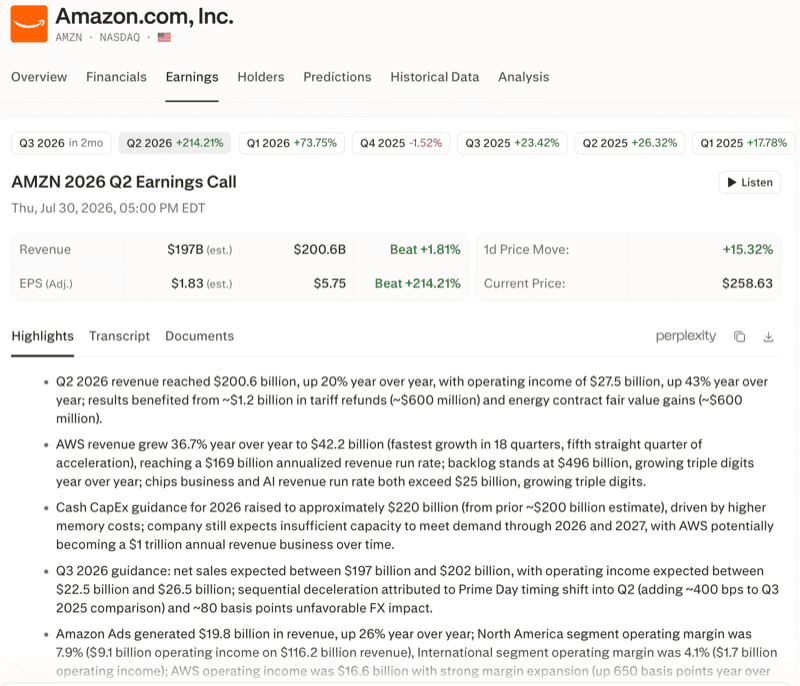
I was General Manager of the Finance vertical at Perplexity AI. I built perplexity.ai/finance from nothing into a real competitor to Google Finance and Yahoo Finance, in under a year.
Entrepreneurial Experience
I built, scaled, and sold my own fintech company. I taught myself to code to do it.
Investing Experience
I was an investment analyst at Citadel, Kang Global (a Tiger Management seed), and Coatue. I started at Goldman Sachs in investment banking. Ten years on the buy side, then ten building product. That combination is the whole point.
Clients
Anonymized by design.
13 active institutional clients across PE, HF, VC, family offices, and academia.
Case Study · My Own Research Dashboard
This one is mine. I built it for myself, and it is a working example of what a fund could run. Agents keep it current. I do not update it by hand. It:
Scores 98 securities across 6 dimensions (financial trends, thematic exposure, management quality, sentiment, risk, price) with a weighted composite
Generates earnings previews and reviews automatically. Key metrics against consensus, guidance patterns, beat and miss history, catalysts, street Q&A.
Monitors material news in real time and flags what actually hits the thesis
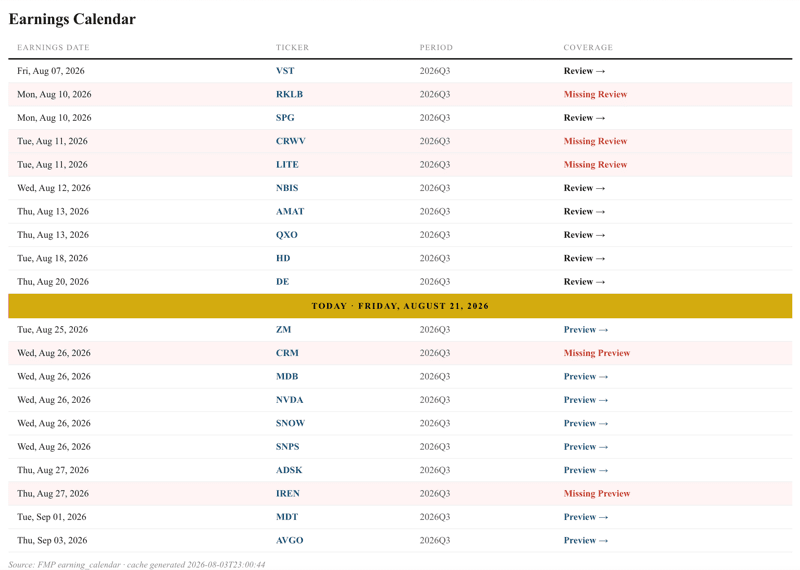
Tracks an earnings calendar with linked preview and review documents for every reporting period
Built with Claude Code, Bloomberg, S&P Capital IQ, and my own scoring models. Prep on a name went from about four hours to under fifteen minutes.
This is the real thing, running live. Scroll it.
Selected writing
LINKEDIN · AUGUST 2026
I asked Claude, Codex, and Grok's best agentic models to analyze an earnings report: the results were hard to tell apart.
Read →EVERY · MARCH 2026
A step-by-step guide from ChatGPT earnings previews to a custom investment dashboard, covering four progressive tiers of AI tooling for investment analysis.
Read →EVERY · FEBRUARY 2026
How finance professionals can automate meeting prep, earnings analysis, screening, and event analysis using Claude Code and pre-built plugins, no engineering team required.
Read →EVERY
A five-step framework for moving from AI experimentation to organizational capability. Covers the "Get fluent → Assign champions → Pick one workflow → Build to 95% → Scale" loop.
Read →Yes, and it usually goes well. Their data scientists are focused on alpha models. I build the operational layer around them.
Everything runs on your infrastructure. I never touch portfolio data. Every system has audit trails and a human review gate.
Larger clients tend to work on a project basis, while smaller clients work best with retainer models.
No. I build production software. APIs, dashboards, agent pipelines, data integrations. The model is one piece of a much bigger system.
Contact
Most engagements start with a 30 minute call. No pitch deck. Just a conversation about how you work and what is worth automating.